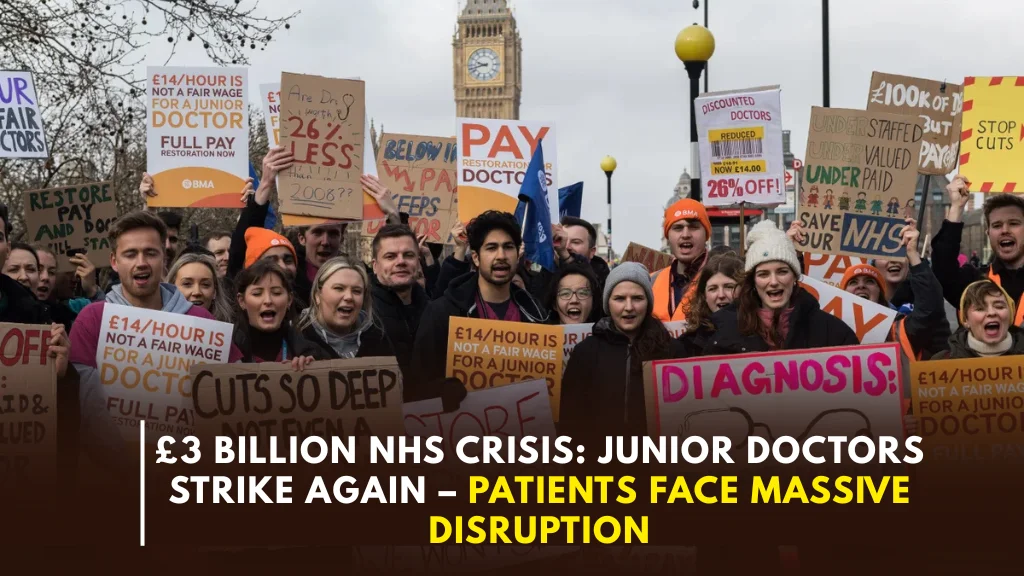
NHS Under Pressure: The NHS is facing renewed disruption as junior doctors walk out once again, marking the 15th round of strikes in just three years. The ongoing industrial action, led by the British Medical Association, has already cost the NHS an estimated £3 billion—raising serious concerns about patient care, waiting times, and the future of the health service.
The latest six-day strike began at 7 am on Tuesday, with thousands of resident doctors joining picket lines across the country. Health leaders warn that the impact will be immediate, with operations cancelled, appointments delayed, and hospitals forced to rely on costly temporary cover. Consultants are reportedly being paid up to £313 per hour to fill staffing gaps, pushing daily strike-related costs to around £50 million.
A Growing Financial and Human Cost
The £3 billion spent on managing strike action could have funded up to 1.5 million operations or employed 75,000 nurses for a year. For many patients, however, the impact is more personal—longer waits, delayed treatments, and growing anxiety about access to care.
According to NHS England, the timing of the strike—immediately after the Easter bank holiday—could place “significant strain” on already stretched services. Hospitals are bracing for a surge in patients who postponed seeking help over the long weekend, while staff shortages are worsened by pre-booked annual leave.
Pay Dispute at the Centre
At the heart of the dispute is pay. Junior doctors are demanding a 26% pay rise, arguing it is necessary to restore earnings lost over years of below-inflation increases. However, the Government says doctors have already received a 28.9% increase over the past three years.
Last month, the BMA rejected an offer that would have raised total pay increases to 35% and created thousands of additional training posts. The decision has drawn criticism from ministers, who say the strike will ultimately harm both patients and NHS staff.
Government Response and Political Pressure
Health Secretary Wes Streeting has strongly criticised the industrial action, accusing union leaders of “sapping the health service of vital funds.” He urged the BMA to reconsider its position and prioritise patient care.
Prime Minister Keir Starmer also weighed in, describing the rejection of the pay deal as “reckless” and warning that continued strikes could undermine progress made in reducing NHS waiting lists.
Sir Jim Mackey, chief executive of NHS England, acknowledged that while services remain open, the situation will be “difficult” and place additional pressure on frontline staff who must step in to maintain patient safety.
Patients Caught in the Middle
Despite the disruption, NHS officials are urging patients to continue attending A&E, dialling 999 or 111 when needed, and keeping scheduled appointments unless told otherwise.
However, with over 7 million treatments still pending, repeated strikes risk slowing down recovery efforts. For patients and families across the UK, the ongoing dispute is not just about pay—it’s about timely care, trust in the system, and the future of the NHS.
As negotiations remain at a standstill, the question now is how long the health service—and those who rely on it—can continue to bear the strain.








2 thoughts on “NHS Under Pressure: Junior Doctors Strike Again as £3 Billion Cost Sparks Fresh Outrage”