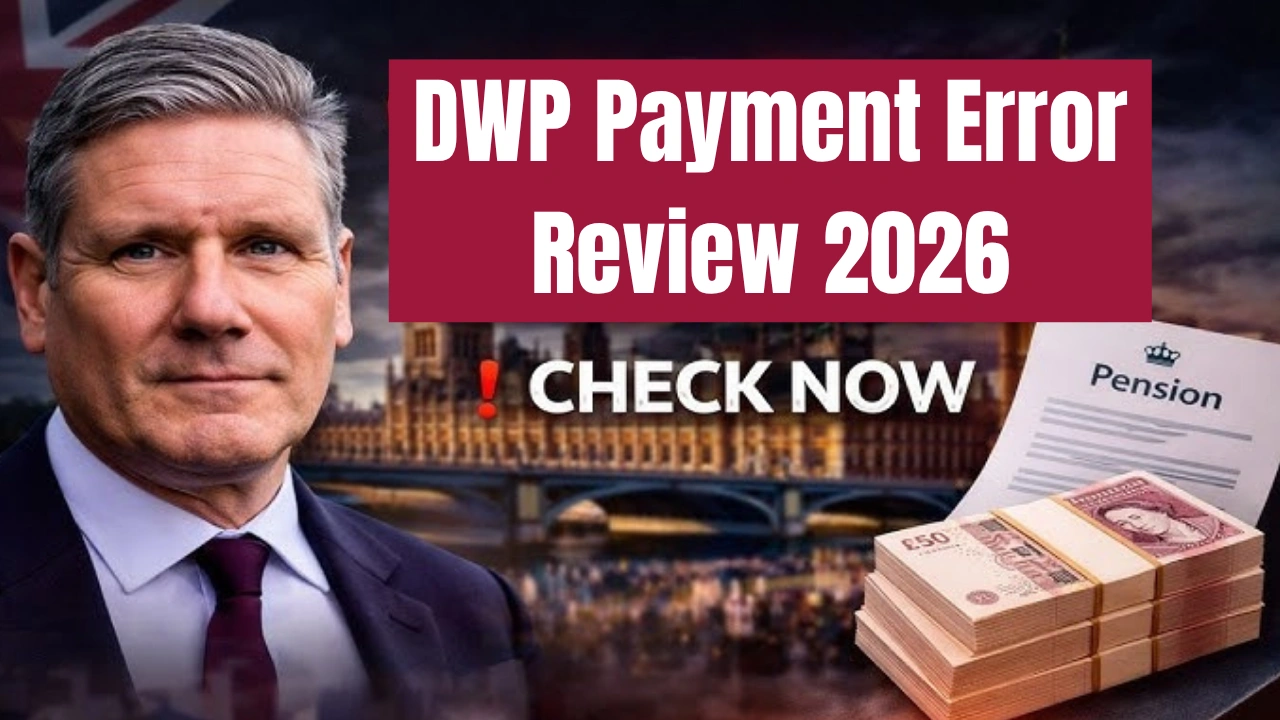
DWP Payment Error Review 2026 is now at the center of public debate after shocking figures revealed how millions were paid incorrectly. What makes this issue serious is not just the amount, but the fact that payments continued even after claimants had passed away. The DWP Payment Error Review 2026 has made people question how such gaps in the system remained hidden for so long.
This situation is not only about numbers. It is about trust, accountability, and how public money is managed. In this article, you will understand the real reasons behind these errors, the scale of the problem, and what changes may come next. The goal is to break down complex details into simple and clear information.
DWP Payment Error Review 2026
The DWP Payment Error Review 2026 gives a detailed look into how benefit payments went wrong and why these mistakes continued over time. It highlights issues like delayed reporting of deaths, slow system updates, and weak coordination between departments. These gaps allowed payments to continue even when claimants were no longer eligible. The review also shows that overpayments are not only caused by fraud but also by official errors and claimant mistakes. With billions involved, the findings have pushed authorities to rethink how data is shared and verified. This review is important because it shows where the system failed and what needs to improve to prevent future losses and restore public confidence.
Overview Table
| Category | Details |
| Benefits paid after death | £850 million |
| Total overpayments in 2026 | £9.5 billion |
| Overpayment cases since 2021 | 2.6 million |
| Annual welfare spending | £300 billion |
| Fraud share | Majority portion |
| Claimant error share | Around 20 percent |
| Official error share | Significant |
| Winter fuel overpayments | £27 million |
| Deceased recipients | Nearly 83,000 |
| Recovery success rate | Less than half |
Scale of the Overpayments
When looking at the DWP Payment Error Review 2026, the size of the problem is hard to ignore. Around £850 million was paid to individuals who had already passed away. This alone shows a serious gap in monitoring and updating records.
The total overpayments reached £9.5 billion in 2026, which is a major concern for taxpayers. These figures show that the issue is not limited to a few cases. It is part of a larger pattern that has been growing over time.
Since 2021, about 2.6 million overpayment cases have been recorded. This shows that the system has struggled for years. While fraud still plays a big role, official mistakes are becoming equally important in the discussion.
Why the Overpayments Happened
The DWP Payment Error Review 2026 explains that most errors happened due to delays in updating important information. When someone passes away, that update does not always reach the system immediately. Payments that are already scheduled continue without interruption.
Another key reason is changes in personal situations. For example, moving into a hospital or care home can affect eligibility. If this change is not recorded quickly, payments continue as usual.
There is also a major issue with data sharing. Different departments do not always communicate in real time. Because of this, small delays turn into large financial mistakes over time.
Pressure Over Benefits Reforms
The findings of the DWP Payment Error Review 2026 have added pressure on ongoing welfare reforms. In recent years, benefit systems have expanded to support more people. While this is helpful, it has also increased the overall cost.
With more claims being processed, the risk of errors also rises. If systems are not strong enough, mistakes become more common. This is exactly what the review highlights.
Experts believe that reforms should be supported by better technology and stronger checks. Without these, increasing support can also increase financial losses.
Fresh Embarrassment for Ministers
The DWP Payment Error Review 2026 has created a difficult situation for government officials. Public trust depends on proper management of funds, and such large errors raise serious concerns.
Ministers are facing criticism for not addressing these problems earlier. Some reports suggest that these issues were already known but not fully resolved. This has led to questions about responsibility and leadership.
The timing of the issue has made it even more sensitive, especially as it follows other financial concerns in public departments.
Winter Fuel Payments Also Sent After Death
One of the most surprising findings in the DWP Payment Error Review 2026 involves winter fuel payments. Around £27 million was sent to nearly 83,000 individuals who had already passed away.
This happens because eligibility is decided months before payments are released. If a person dies during that gap, the system may still process the payment.
This shows how even small delays in updating records can lead to large financial impacts. It also highlights the need for better timing and system checks.
Political and Public Reaction
The DWP Payment Error Review 2026 has triggered strong reactions across the country. Many people are concerned about how taxpayer money is being used.
There is growing frustration that such large errors were not detected earlier. People expect better systems and stricter controls when it comes to public funds.
Political leaders have also raised concerns. They are calling for immediate improvements, including better monitoring and stronger accountability.
Recovery Costs and Official Response
Recovering the lost money is not always simple. The DWP Payment Error Review 2026 shows that in some cases, the cost of recovery may be higher than the amount itself.
Officials have stated that they will focus on cases where recovery makes financial sense. They are also encouraging families to report deaths quickly using official services.
Efforts are being made to improve the system. These include faster updates, better coordination, and use of digital tools to track changes more effectively.
Key Issues Identified
- Delayed reporting of claimant status changes
- Lack of real time system updates
- Weak coordination between departments
- Over reliance on manual processes
- Limited tracking of scheduled payments
These points highlight the main weaknesses found in the system.
Possible Improvements in the System
- Introduction of automated data verification systems
- Faster integration of death records across departments
- Real time monitoring of benefit payments
- Improved digital claim platforms
- Stronger checks before releasing payments
These improvements can help reduce errors and improve system efficiency.
FAQs
1. What is the DWP Payment Error Review 2026?
It is a report that highlights errors in benefit payments, including money paid after claimants had passed away.
2. How much money was incorrectly paid?
Around £850 million was paid after death due to system delays and errors.
3. What caused these payment issues?
Main causes include delayed updates, poor data sharing, and system gaps.
4. Can the government recover all the money?
No, recovery depends on whether it is cost effective in each case.
5. What changes are expected after this review?
Better digital systems, faster updates, and improved coordination are expected.